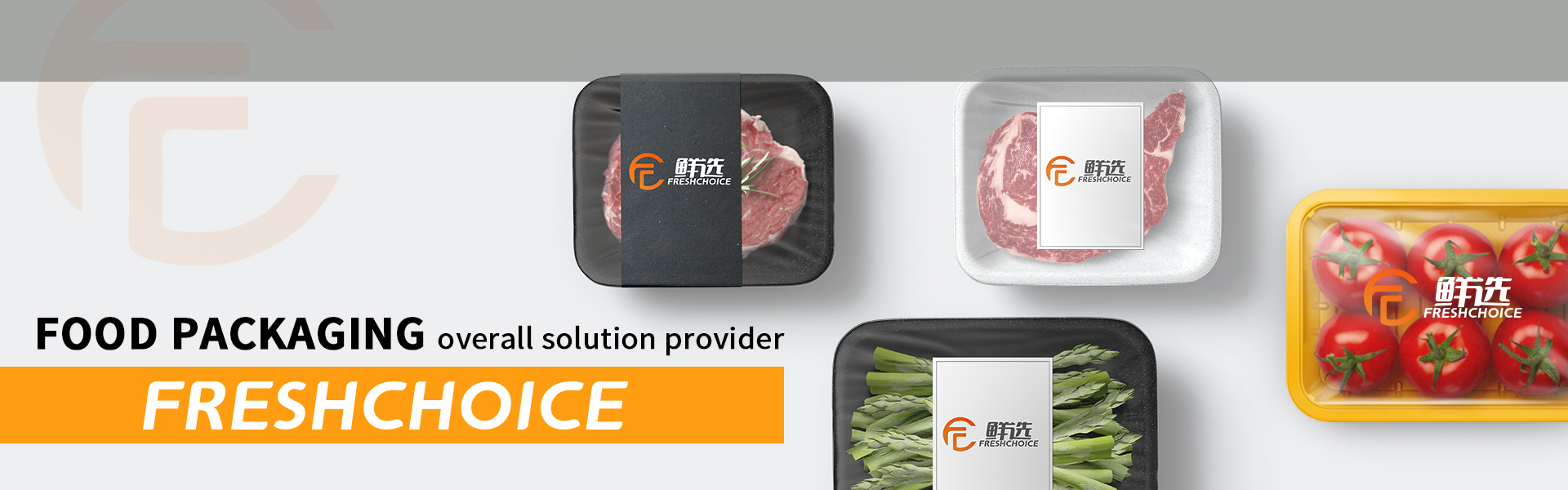
The basic atmospheric packaging technology of Modified Atmosphere Packaging (MAP) has a stable position in the food industry, and its importance is increasing day by day. Simply put, the natural ambient air inside the packaging
Replaced by gas or gas mixture (usually nitrogen and carbon dioxide). Packaging that protects the environment can maintain the quality of fresh food for a longer period of time, extending
Shelf life and provide food producers with a larger perishable market geographically. Products such as sausages, dairy products, bread, fruits, vegetables, fish, or convenience foods.
Modified atmosphere packaging is not only used for packaging. You can also use processing techniques, such as for minced meat, or during storage and transportation, such as in auditoriums or containers
Use fruits and vegetables. For modified atmosphere packaging, the packaging process requirements are relatively high.
Food safety packaging can only be used by personnel in charge and control. Because of this, food manufacturers rely on modern MAP gas technology and various levels of quality assurance,
To maximize the reliability of the production process. In a protective environment, the benefit of packaged food spoilage is to extend its shelf life/improve quality. And continuous
The combination of cooling and improved air packaging can significantly extend freshness and shelf life. That depends on the product type. However, it is usually possible to double the shelf life.
As a result, MAP products typically have the best quality over a long period of time and are delivered to consumers in the best condition. Usually, avoid wasting longer shelf life and less
The transportation route is related to longer shelf life. This method can be used to reduce waste caused by food spoilage. Due to the long shelf life, modified atmosphere packaging is usually produced by manufacturers
Open up new geographic markets. It is also possible to use longer transportation routes, especially for perishable goods. The global market often becomes a reality.
In order to protect the environment, packaging with fewer preservatives can extend the shelf life of food. In many cases, the use of preservatives can be reduced or even completely prohibited. Received by customers
The product does not contain any artificial additives. Exquisite packaging plays a decisive role for consumers in competition, not only in terms of functionality, but also in the appearance of the packaging. Aesthetic and quality perception have an impact on
Purchasing behavior has a significant impact. Gas masks are perfect for the most attractive food packaging design and display. The disadvantages of protective gases are relatively complex, and MAP packaging technology requires them to
Find relatively high. Leakage may be caused by incorrect gas composition or temperature or pressure distribution, improper connection tool design, contaminated or worn tools, etc
Sewing contaminated or incorrect materials. But through modern MAP technology and quality assurance measures, risks can be safely controlled. In addition to high-quality films, higher priced ones
Gas consumption and personnel costs in quality control will also increase costs. However, by effectively utilizing resources, these costs can be minimized to the greatest extent possible. It is related to prevention and control
The impact of preservatives on product quality is opposite, for example, protecting the gas from being absorbed by food, thus not changing the consistency and taste of the product. But there are exceptions to this rule.
For example, high concentrations of carbon dioxide can cause food to absorb gases and become acidic. However, the appropriate use of mixed gases can avoid these effects. And excessive oxygen concentration can have an impact on
The impact of meat quality is still controversial. During the period of harvesting fruits and vegetables or slaughtering animals, factors that affect the shelf life and protective atmosphere of food can cause them to spoil.
The more products are processed, such as cutting fruits or minced meat, it can usually accelerate the processing process.
How long food can be stored, that is, when it is suitable for consumption, varies greatly depending on various factors, such as water and salt content, pH value, and the production process
Hygiene conditions, as well as storage conditions such as temperature or humidity, packaging. The sensitivity of food to microbial or chemical/biochemical spoilage depends on the characteristics and combinations of these factors.
After collecting vegetable materials or slaughtering animal materials, biochemical reactions begin to alter the structure or quality of the chemical process. However, the quality of organic materials is basically declining.
For example, the oxidation of existing fats quickly leads to product rancidity. The main threats to food shelf life and palatability are microbial spoilage. On the one hand, they affect color and odor,
On the other hand, it may also pose health risks, making the product inedible. In the production and packaging process, the source of microorganisms may be the food itself or contamination that cannot be completely eliminated.
The combination of MAP technology and refrigeration has a significant mitigating effect due to changes caused by chemical, biochemical, and microbial spoilage factors. Utilizing different gases with different properties and
Mix and slow down the deterioration process as much as possible.
Address: No. 6 Exploratory Road, Wuxi City, Jiangsu Province, China